
The word “restoration” sounds like music to a homeowner’s ears. It conjures images of a quick fix, a youthful glow, and, most importantly, a significantly smaller price tag than a full roof replacement. For many, a “restoration treatment” seems like the perfect way to get a few more years out of an aging roof.
The truth is, while roof restoration is a viable solution for some, it is not a cure-all. In fact, many roofs that homeowners hope can be restored are unfortunately past the point of no return. The key to making a smart financial decision and ensuring the long-term health of your home is understanding when a restoration treatment is truly effective and when a replacement is inevitable.
This blog post is your guide to determining if your roof is a prime candidate for a restoration, with a specific focus on the signs of life and the red flags to watch out for.
First, a Reality Check: The Goal of Restoration
A restoration treatment is not a structural repair. It will not fix a sagging roof, it will not seal a leak that is actively dripping into your attic, it will not replace rotted decking, and it will not put granules or asphalt back on the roof. Its primary purpose is to prolong the life of an existing, functional roof by protecting its surface.
It’s about restoring the lost oils in the asphalt layer, thus restoring flexibility of the shingle. Think of it like putting leather conditioner on your shoes. It makes the shoe look better and last longer, but it won’t remove cracks, fix holes or add leather to the shoe.
The Ideal Candidate for Shingle Restoration
A roof that is a good candidate for restoration is one that is fundamentally sound but showing signs of wear and tear. Here are the specific criteria our experts look for:
1. It is Relatively New (10-15 Years Old)
Age is a primary factor. While architectural shingles can last 25-30 years in some areas, average roof lifespan in the Willamette Valley is about 18-22 years. On the Oregon coast, average roof lifespan is even lower at 15-18 years. A restoration treatment can extend that by another 5 years or so, but only if applied before the shingle’s core asphalt structure has completely degraded. If your roof is approaching the 20-year mark, restoration may be a waste of money. The ideal window is often around 10-15 years of age.
2. Granule Loss is Uniform, but Not Catastrophic
A common sign of an aging roof is the loss of granules – the colored, stony bits that give shingles their color and protect the underlying asphalt from the sun. If you look into your gutters and see a significant buildup of granules, your roof is losing its protection.
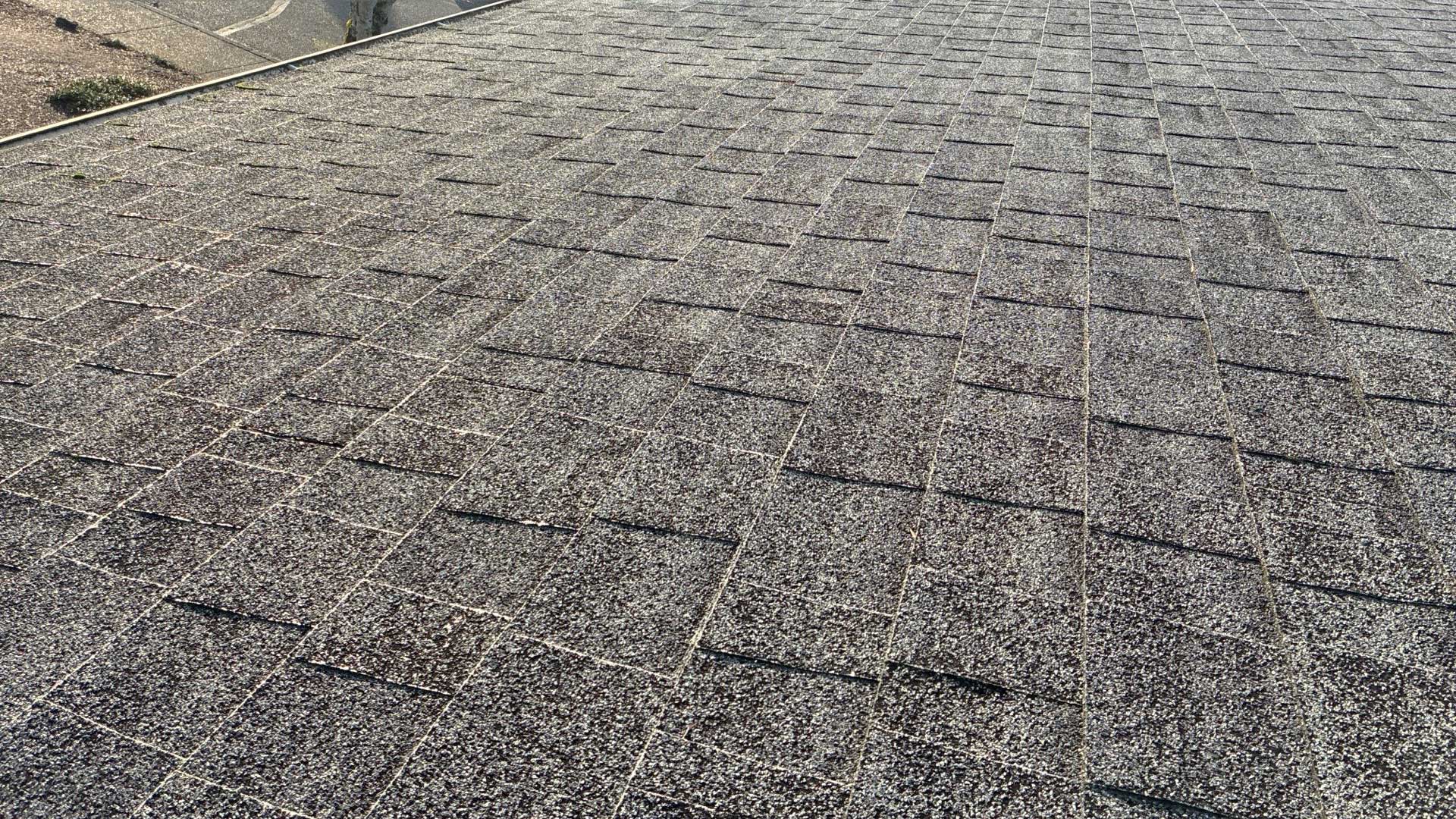
A roof that is a good candidate will show some uniform granulation loss across the entire surface. This indicates that while the shingle’s protection is thinning, the base itself is still intact. A restorative treatment can help rejuvenate the existing asphalt, making the shingle more resilient and effective.
3. It’s Faded but Flat (Minimal or No Curling)
Sun damage fades shingles. If your roof is much duller and more grey than it used to be, it’s a sign that the color granules are gone, but that alone doesn’t mean it’s shot.
What does matter is the physical shape of the shingle. If the edges are still sitting flat against the roof, that’s a positive sign. Once shingles start to curl up at the edges (cupping) or sag down in the middle (clawing), the physical structure has warped, and a restoration treatment will not flatten them.
4. The Problem is Purely Algae/Moss Growth
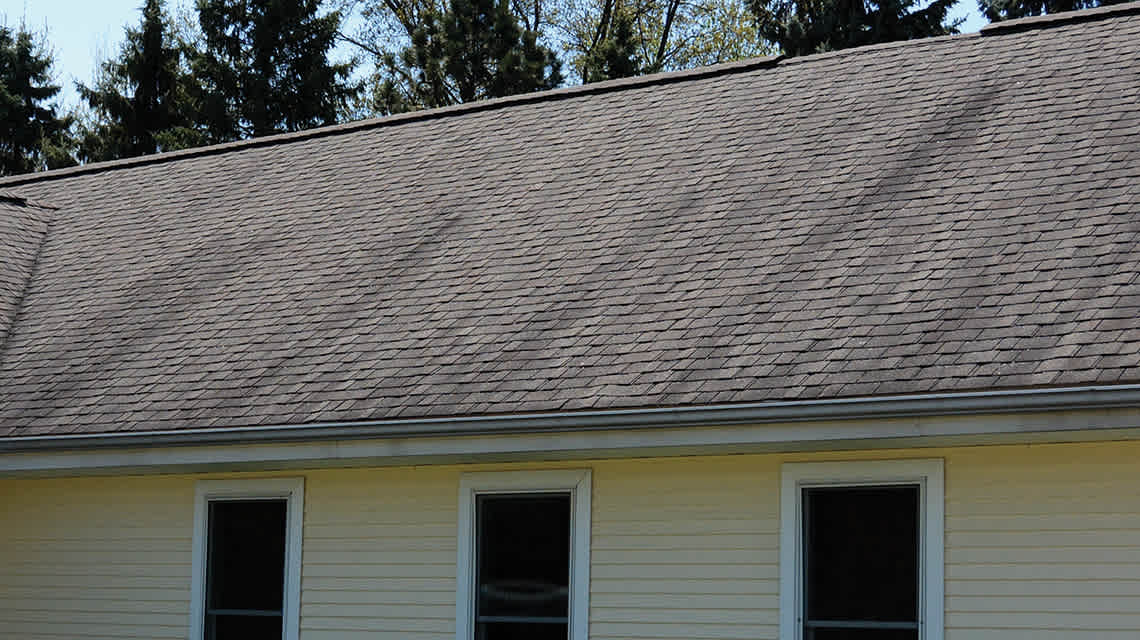
If your “damaged” roof is really just an ugly roof covered in black streaks (Gloeocapsa magma algae) or patches of green moss, you are in luck! This is rarely a sign of serious structural failure, but it is a major cosmetic issue that can retain moisture and accelerate wear.
A roof that is a candidate for restoration will often need a deep cleaning first to remove all growth. Then, a restoration treatment can be applied to create a surface that is hostile to new moss and algae.
5. No History of Leaks or Water Damage
This is non-negotiable. A restoration treatment should not be applied to a roof that is currently leaking. Restoration coatings are designed to be waterproof on top of a sound surface. They are not engineered to bridge large holes, seal flashing that has detached, or fix water that is tracking from an unknown source.
If you have stains on your ceiling, a restoration treatment is not the answer. You need a repair, and possibly a replacement.
The Verdict: How to Find Out for Sure
Even if your roof hits all these points on paper, the only way to know for certain if it’s a candidate is to schedule a professional, hands-on inspection.
A qualified roofer will:
- Conduct an Adhesion Test: They will clean a small patch of your roof and apply a sample of the restoration coating to see how well it sticks. If the shingle is too brittle or too oily, the product won’t adhere, and restoration is not an option.
- Check the Core: They will feel the shingles to see if they are brittle or flexible. Brittleness is a clear sign that the asphalt core is cooked and cannot be saved.
- Inspect the Decking: They will walk the entire surface, feeling for soft spots that indicate water has already compromised the plywood underneath.
Ready to Find Out if Your Roof Can Be Saved?
Don’t let guesswork or a “one-size-fits-all” sales pitch dictate the future of your home. A restoration treatment, when applied correctly to the right roof, is a smart, economical, and sustainable choice.
If your roof is between 10-15 years old, has minimal curling, uniform granule loss, and is free of leaks, it is a prime candidate for a consultation. Contact us today to schedule a professional roof inspection. We will provide you with a honest assessment and let you know if a restoration is a smart way to protect your investment for years to come.