

In the Pacific Northwest, your gutters aren’t just an accessory—they are an integral part of your home’s primary defense system. Between the relentless “nine-month drizzle” of the Willamette Valley and the heavy, salt-laden storm surges of the Oregon Coast, your gutter system works harder than anywhere else in the country.
At Pfeifer Roofing, we’ve seen what happens when gutters fail in Oregon: rotted fascia, roof structure dry rot, flooded crawlspaces, and compromised foundations. This guide is designed to help you navigate the specific challenges of our local climate.
The Coastal vs. Valley Comparison
Choosing the right system depends entirely on your zip code. Use this quick reference to see what your home needs.
| Feature | Willamette Valley (Salem, Eugene, Portland) | Oregon Coast (Newport, Lincoln City, Pacific City) |
| Primary Threat | Douglas Fir needles & heavy moss growth | Salt-air corrosion & 60+ MPH wind gusts |
| Recommended Material | Heavy-gauge Aluminum | Heavy-gauge Aluminum |
| Ideal Gutter Size | 5-inch (Standard) or 6-inch for steep roofs | 6-inch (Oversized) to handle surge volumes |
| Hanger Spacing | Every 24-36 inches | Every 24-36 inches |
| Debris Challenge | Maple “helicopters” and oak tassels. | Wind-blown sand and horizontal rain |

1. Material Science: What Actually Lasts?
In many parts of the country, vinyl gutters are a popular DIY choice. In Oregon, vinyl gutters are a mistake. Our temperature swings make vinyl brittle, leading to cracks during a valley freeze. The material you choose determines if your gutters will last 10 years or 50 years.
- Heavy-Gauge Aluminum: The gold standard for the Willamette Valley and the Oregon Coast. It doesn’t rust and can be painted to match any siding.
- Vinyl: Not a good choice in Oregon because constant rain, temperature swings, and UV exposure cause the material to expand and contract, making it brittle over time. Once brittle, they crack, sag under heavy water loads, and fail much sooner than metal alternatives like aluminum or steel.
- Steel or Galvalume: We generally advise against galvanized steel everywhere, especially on the Coast, where salt air will eat through the zinc coating in just a few seasons.
2. Seamless vs. Sectional: Why It Matters
In a region where it can rain for 14 days straight, every “seam” in your gutter is a ticking time bomb.
- Sectional gutters (bought at big-box stores) rely on sealant at every joint. Over time, Oregon’s humidity and temperature shifts cause that sealant to fail.
- Seamless gutters are custom-rolled on-site to the exact length of your roofline. No seams means no leaks, and a much cleaner aesthetic for your home.
3. Gutter Anatomy: Speaking the Language
Before you can fix a problem, you need to know what the parts are called. Here is the breakdown of a professional gutter system:
- Trough (The Channel): The horizontal section that collects water from the roofline.
- Downspouts: The vertical pipes that carry water from the gutter to the ground.
- End Caps: The flat metal pieces that seal off the ends of a gutter run.
- Miters: The corner pieces that connect two gutters at a 90-degree angle (usually the first place a leak occurs).
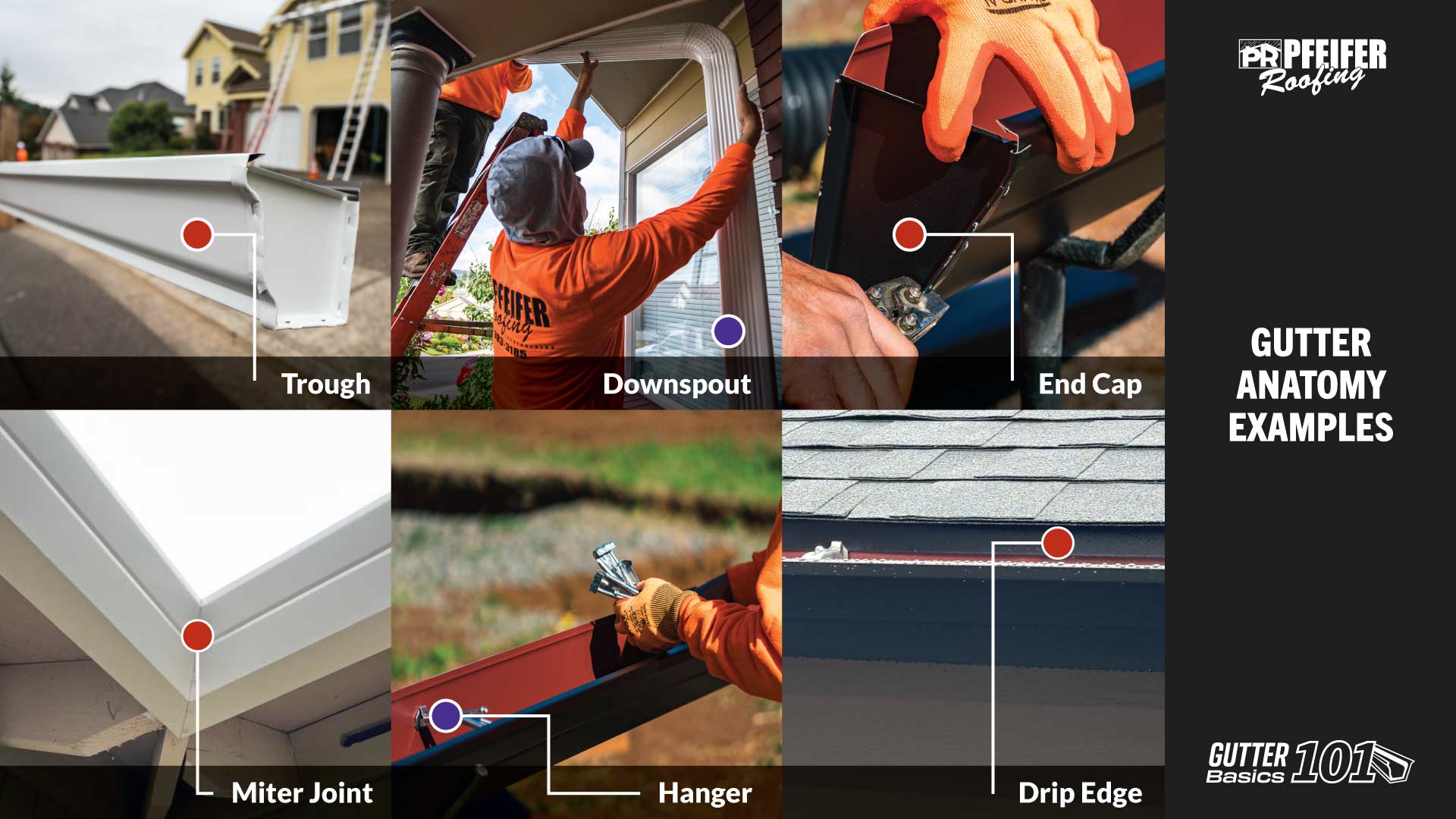
- Hangers: The internal brackets that secure the gutter to your home’s fascia board. In the PNW, we use heavy-duty “hidden hangers” for a cleaner look and extra strength against snow/wind.
- The “Salt-Air” Fastener Rule: On the Oregon Coast, even the best aluminum fascia gutter will fail if the internal hangers are not properly matched. At Pfeifer Roofing, we use aluminum fasteners with special-coated screws to ensure fastener integrity and that the high winds of a coastal storm don’t rip the gutters off the rafters.
- Fascia Board: The wooden board running along the edge of your roof where the gutters are mounted.
- Drip Edge: An L-shaped metal flashing that tucked under your shingles and over the back of the gutter to ensure water doesn’t seep behind the system and rot your wood.
4. Gutter Types & Styles
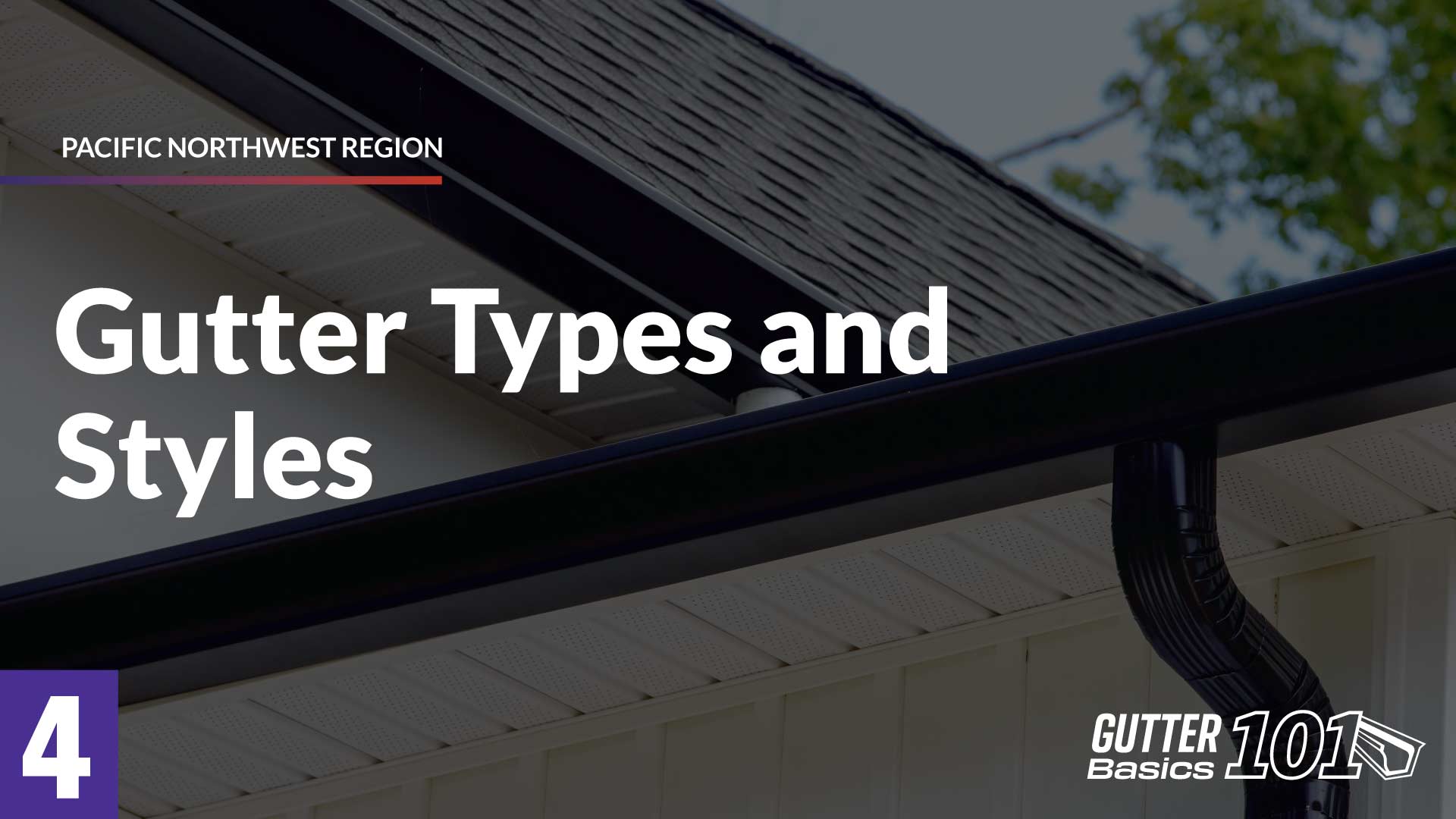
Not all gutters look—or perform—the same. In Oregon, the “style” is often dictated by the architecture of your home and the pitch of your roof.
K-Style Gutters
The most common profile in the Willamette Valley. The front has a decorative curve that mimics crown molding.
- Pros: Holds more water than half-round gutters; very sturdy.
- Best For: Classic homes or direct replacement of existing gutters. Recommend 6″ for high-flow rain areas, especially metal roofs.
Fascia Style Gutters (The PNW Standard)
If you live in a newer development in Salem, Eugene, or the Portland suburbs, you likely have Fascia Style gutters. Unlike K-Style gutters that sit on the fascia board, these are designed to become the fascia.
- Pros: Very clean, architectural “border” to the house. Because they are deeper than standard K-Style gutters, they can often handle a higher volume of water—a major plus during a Willamette Valley “atmospheric river.”
- Best For: Modern homes and high-flow rain areas.
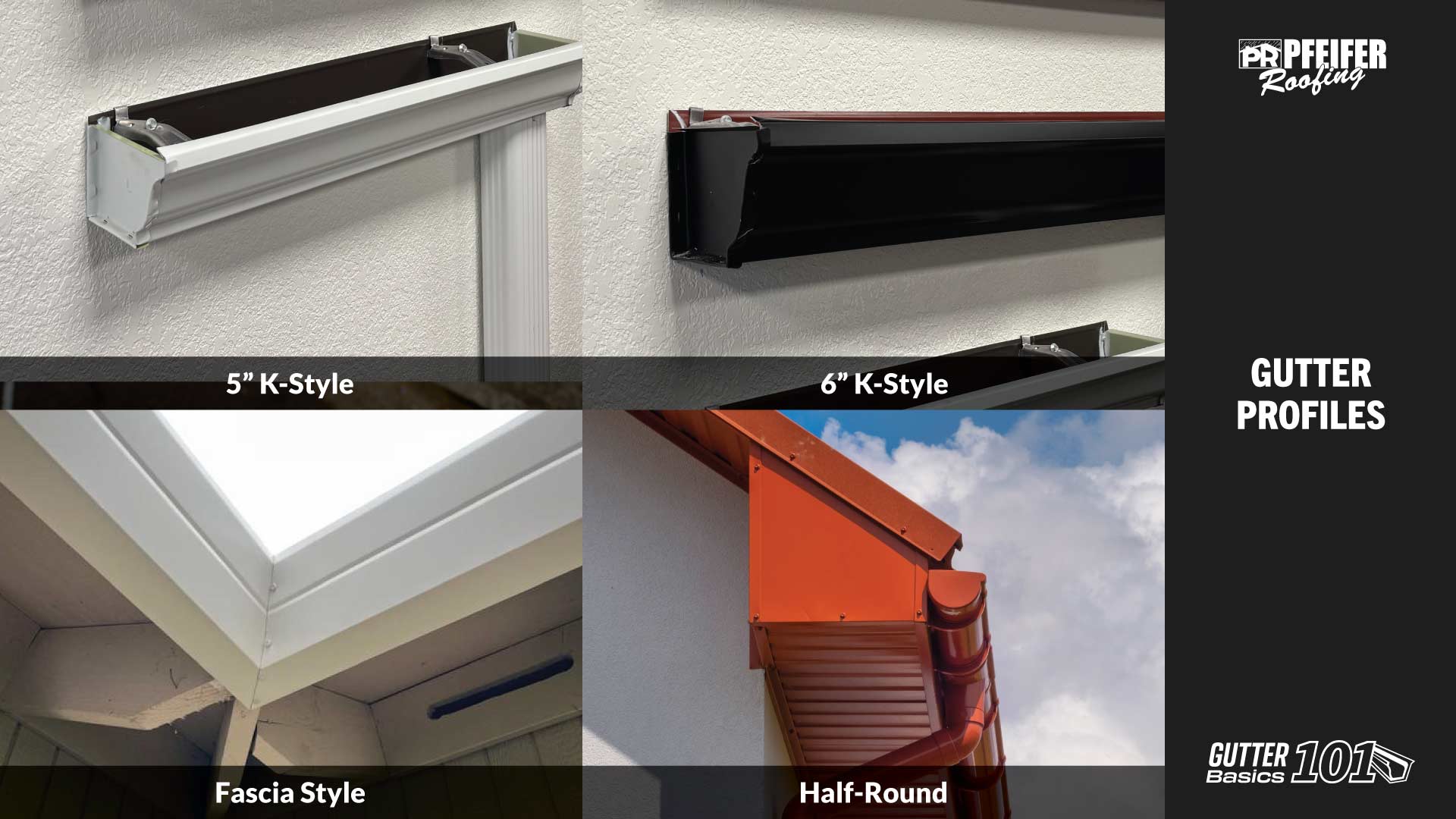
Half-Round Gutters
A “U” shape that is often found on historic homes in North Salem or the older districts of Eugene.
- Pros: Smooth interior prevents debris from getting “snagged”; classic aesthetic.
- Best For: Historic restorations or homes with a European look.
Box Gutters (not pictured)
Industrial-style gutters that are often built into the roof structure itself.
- Pros: Extremely high capacity.
- Best For: Commercial buildings or modern “flat-roof” coastal designs.
Gutter Styles Comparison Table
| Style | Aesthetic | Water Capacity | Best For |
| K-Style | Decorative (Crown Molding) | High | Most modern residential homes. |
| Fascia Style | Modern / Seamless Border | Very High | PNW subdivisions & homes with no fascia board or for an upgraded look. |
| Half-Round | Historic / Old World | Medium | Historic Willamette Valley districts. |
| Box Style | Industrial / Angular | Extreme | Commercial or “Modern-Industrial” Coastal homes. |
5. Managing the Runoff: Foundations & Clay
The Willamette Valley is known for heavy clay soil. Unlike sandy soil, clay holds water. If your gutters dump water directly at the base of your home, that water will sit against your foundation, eventually leading to cracks or a flooded crawlspace.
We recommend every installation includes properly pitched downspouts and extensions that move water at least 5 to 10 feet away from the structure, if gutter drainage isn’t already installed to the street.
6. The Recommended Maintenance Schedule
In the Pacific Northwest, a “once a year” cleaning isn’t enough. We recommend a two-hit strategy:
- Late Fall (November/December): After the last of the big leaf maples and oaks have dropped. This clears the way for the heavy winter rains.
- Late Spring (May/June): To clear out the “spring drop,” the seeds, tassels, and pollen strings that can clog your system right before the occasional summer thunderstorm.
7. The “Big Tree” Problem: Gutter Guards that Work
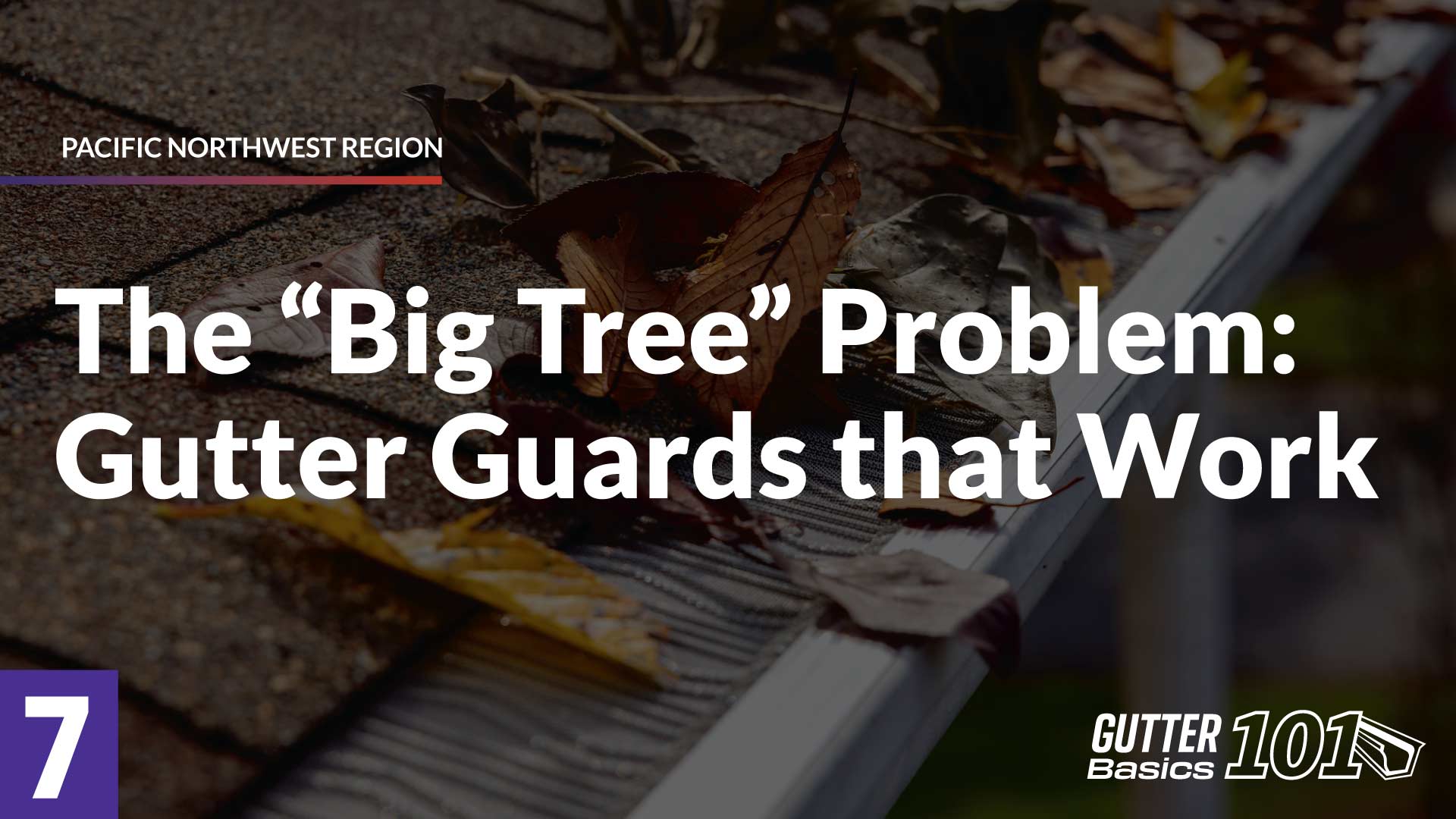
If you live near the Cascades or most anywhere in the valley, you know the struggle of falling leaves and debris. Big leaf maples, their corresponding seeds (whirlybirds), and other deciduous trees tend to clog gutters quickly.
We recommend Micro-Mesh Systems. These feature a stainless steel mesh so fine that most debris can’t penetrate it. This is essential for preventing “gutter gardens”—those patches of moss and ferns that love to grow in the damp debris of an Oregon gutter.
The Leaf Blaster Pro® Advantage
In the Pacific Northwest, most “screens” or “hoods” fail because they aren’t designed for the sheer volume of debris and maple seeds we have. This is why we exclusively install Leaf Blaster Pro.
Why Leaf Blaster Pro for Oregon?
Unlike basic plastic covers, Leaf Blaster Pro is a high-performance Stainless Steel Micro-Mesh system.
- The Fine-Mesh Secret: The weave is so tight that most leaf debris cannot poke through, yet it can siphon over 100 inches of rain per hour.
- Anodized Aluminum Frame: The frame is built to withstand the heavy moss growth common in the Willamette Valley without warping or rusting.
- Z-Bend Technology: The mesh has a patented “Z” shape that allows air to get under the debris, meaning a light Oregon breeze is often enough to blow dry leaves right off the top.
- Vermin Proof: It creates a total seal that keeps birds, squirrels, and wasps from nesting in your troughs.
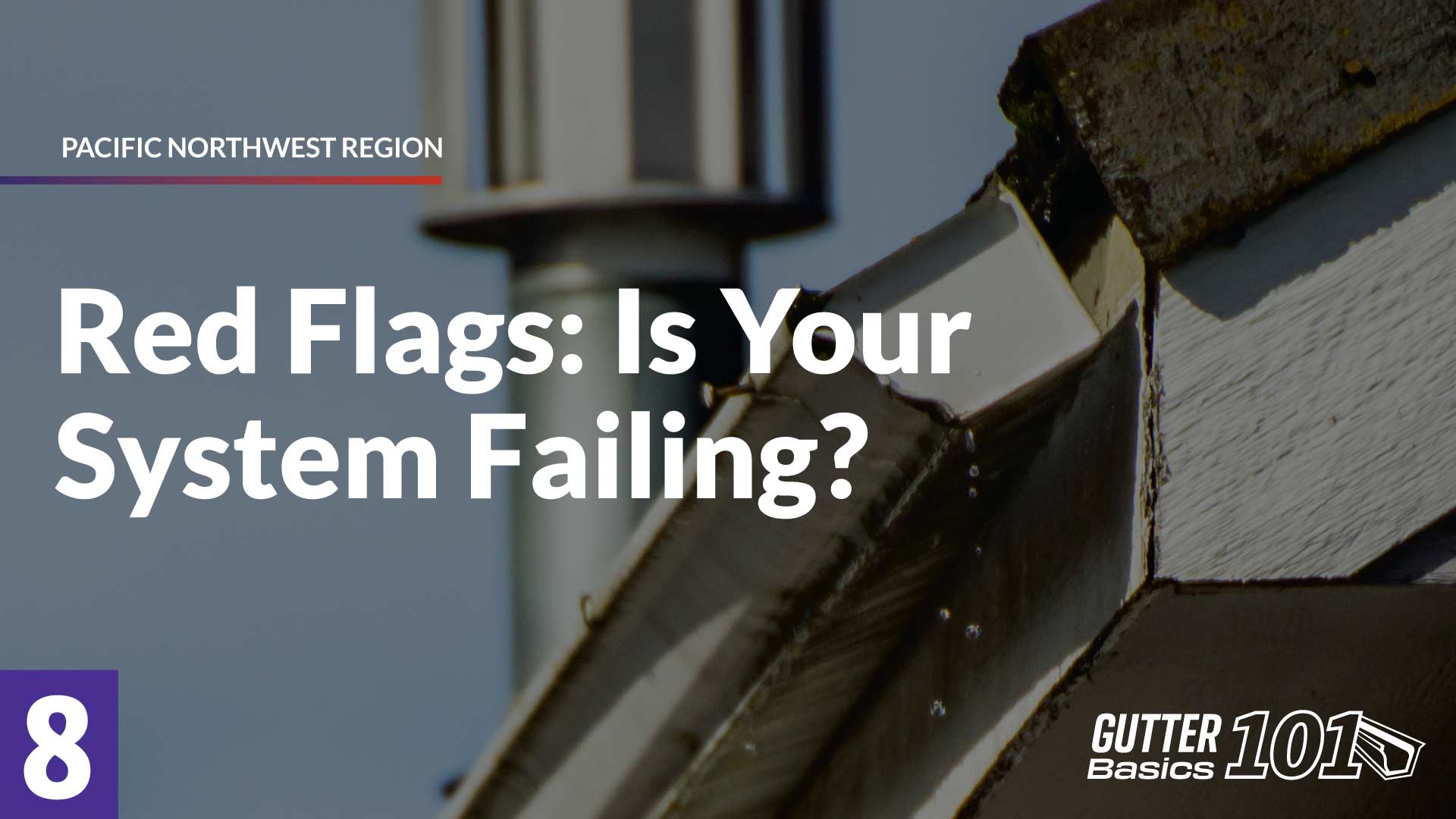
8. Red Flags: Is Your System Failing?
Keep an eye out for these local warning signs:
- Tiger Striping: Dark vertical streaks on the outside of your gutters. This means water is overflowing and taking dirt with it.
- Pulling Away: If there’s a gap between your gutter and the wood (fascia), the wood may be rotting due to trapped moisture.
- Basement/Crawlspace Dampness: Often, a “foundation leak” is actually just a clogged gutter overflowing right into the vents.
9. FAQ: Common Oregon Gutter Questions
Q: How much do gutters cost in the Willamette Valley?
A: Prices vary based on the “run” (total feet) and material. Aluminum is the most cost-effective, while Copper is a premium investment. On average, a full replacement for a standard 2,000 sq. ft. home in Oregon ranges from $1,500 to $3,000, depending on whether you add Leaf Blaster Pro protection.
Q: Can I change from Fascia Style to K-Style?
A: Yes, but it often requires adding a traditional wooden fascia board first. Our team specializes in “Fascia-to-K-Style” conversions if you’re looking for a more traditional look for your home.
Q: Can I change from K-Style to Fascia Style?
A: Yes, and we can install the new Fascia style directly over your existing fascia board. This is a great option if you’re looking for a more modern or upgraded look for your home.
Q: Why are my gutters “Tiger Striping”?
A: Those dark streaks on the face of your gutters are caused by pollutants and debris-filled water overflowing the top. In the humid Willamette Valley, this can lead to permanent staining. A seamless system with Leaf Blaster Pro prevents the overflow that causes this.
10. Ready to Winter-Proof Your Home?
Don’t wait for the next atmospheric river to find out your gutters are failing. Whether you’re facing the salt spray of the Pacific or the pine needles and big leaf maples of the Valley, we can help.
For a free quote, give us a call at 503-393-3185 or fill out our quote request form.