
A Homeowner’s Guide to Pacific Coast Weathering
When coastal homeowners ask, “How long does a roof last?” the answer isn’t found in a laboratory—it’s found in the salt mist and the 80-mph gusts. On the Oregon coast, a roof’s lifespan is a high-stakes endurance test. From the relentless 60–100+ inches of annual rainfall to the salt spray that corrodes standard hardware, your roof works double-time compared to inland homes.
Average Lifespan by Material
On the Oregon coast, roofs reach “retirement age” significantly faster than the national average due to constant moisture and wind-driven rain.
| Material Type | Estimated Lifespan (Coastal OR) | Maintenance Level |
| Architectural Shingles | 15 – 18 Years | Moderate to High |
| Metal Roofing (Coastal Grade) | 30 – 50 Years | Low |
| Cedar Shakes | 15 – 25 Years | Very High |
| Clay / Concrete Tile | 25+ Years | Moderate |
Note: On the coast, metal roofing must be specifically “coastal grade” (often aluminum or high-end coatings) to resist salt-air corrosion.
Why Do Roofs Age Differently on the Oregon Coast?
If you’re moving from the valley, you’ll notice coastal roofs take a beating much faster due to these local factors:
- The “Salt Spray” Factor: Salt is abrasive and corrosive. It doesn’t just eat through metal; it can degrade the adhesive bonds in shingles over time.
- The “Horizontal Rain” Effect: Coastal storms don’t just fall down; they blow sideways. This forces moisture into tiny vulnerabilities and under shingles where gravity usually protects them.
- Gale-Force Winds: High-velocity winds can lift shingles, breaking the sealant strip. Once that seal is broken, the next storm can rip sections of the roof clean off.
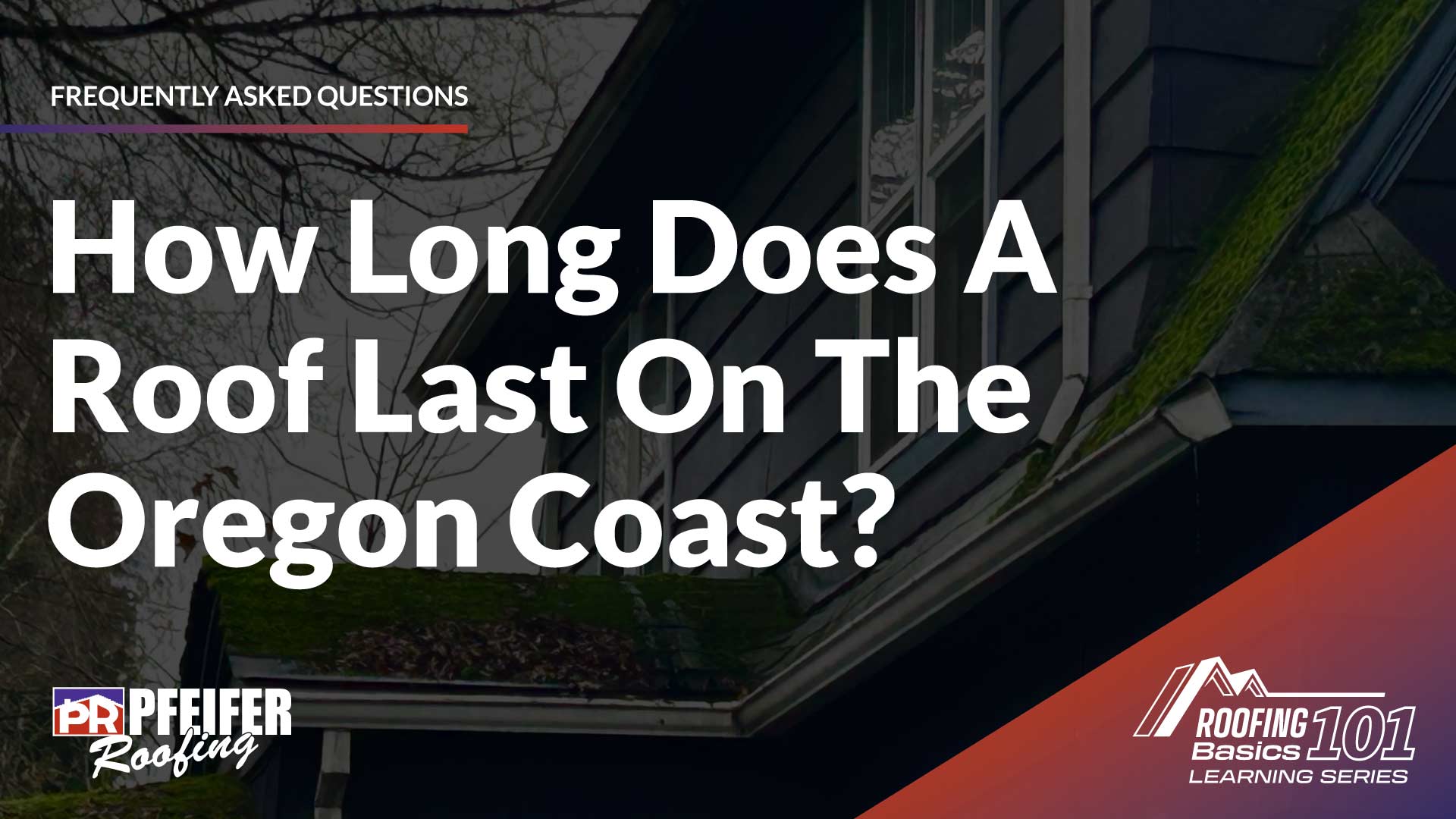
- The Moss & Lichen Duo: Just like in the Willamette Valley, moss thrives here, acting like a water-logged sponge that rots wood decking. On the coast, you also deal with salt-hardy lichens that grip even tighter to your roof.
Frequently Asked Questions
“My shingles had a 30-year warranty. Why is my roof failing at year 15?”
Manufacturer warranties are based on “ideal” conditions. In the salty, wind-swept Pacific NW coast, factors like wind-driven rain and extreme humidity accelerate wear. A “30-year” shingle on the coast is often considered “old” by its 15th birthday.
“Does the wind actually hurt the roof, or just blow things around?”
Wind is a roof’s primary enemy on the coast. Constant “micro-uplifts” weaken the fasteners and sealants. If moss is present, it makes the shingles heavier and easier for the wind to “grab” and tear.
Pro Tips to Extend Your Coastal Roof’s Life
You can add 5 to 7 years to your roof’s life with coastal-specific care:
- Stainless Steel Fasteners: Ensure any repairs or installations use stainless steel nails and flashing to prevent salt-air rust-through.
- Clear the Debris Immediately: Pine needles and coastal brush trap moisture and salt against the roof surface, causing “wicking” under the shingles.
- Aggressive Moss Prevention: Use a moss treatment in the spring and fall. The coastal humidity means moss grows year-round, not just in winter.
- Inspect After Every Storm: Don’t wait for a leak. After a major wind event, check for lifted or “tabbed” shingles that may have lost their seal.
Is it Time for a Check-Up?
On the coast, if your roof hasn’t been replaced since 2010, you are likely entering the “danger zone” for failure.
For a free coastal durability assessment, call 541-583-0033 or fill out our Estimate contact form.