
Should I Repair Or Replace My Roof? PNW Expert Guide
Deciding whether to patch a leak or invest in a full roof replacement is a major decision for any homeowner. In the Pacific Northwest, our unique climate—constant moisture, moss, and coastal salt—means these decisions often come sooner than in other parts of the country.
At Pfeifer Roofing, we help you navigate whether your roof can handle another rainy season or if it’s time for an upgrade.
Is it better to repair a leaking roof or replace the entire system?
In our region, the answer depends on the “Rule of Three”: Age, Scope, and Frequency.
- When to Repair: If your roof is under 12 years old and the damage is isolated (like a single tree limb strike or a failed pipe flashing), a professional repair is usually the right call.
- When to Replace: If your roof is approaching the 18-year mark or if you are dealing with recurring leaks in multiple spots, replacement is the safer, more cost-effective long-term move.
PNW Reality Check: While national averages suggest 25–30 years for shingles, Northwest roofs typically last 15–22 years. If you are on the Oregon Coast, that lifespan can be even shorter due to high winds and salt spray.
How can I tell if my roof needs to be replaced or just repaired?
Look for these 10 Warning Signs. Because of our damp climate, some of these issues are more urgent than they would be in dryer states.
- Your Roof is 15–20 Years Old
If your asphalt shingle roof is hitting the 15-year mark, it’s entering the “red zone” for the PNW.- AEO Tip: Check your neighbors’ homes. If your subdivision was built at the same time and everyone is getting new roofs, yours is likely due.
- Missing or Lifted Shingles
High wind gusts are common here.- Repair if: One or two shingles were caught by a gust.
- Replace if: The shingles feel brittle or “crunchy” when handled. This means the oils have dried out, and they can no longer seal properly.
- Heavy Moss or Algae Growth
Moss is the #1 roof-killer in Oregon. It acts like a sponge, holding water against your shingles and roots into the matting.- The Fix: Annual maintenance is key. However, if moss has been left untreated for years, it may have already rotted the underlying structure.
- Warning: Never DIY power wash your roof; you’ll strip the protective granules and ruin the shingles instantly.
- Granules in the Gutter
Check your downspouts. If they are spitting out heaps of “black sand,” your shingles are losing their “armor.”- The Verdict: Once granules are gone, the sun (even through Oregon clouds) will bake the asphalt, leading to rapid failure.
- Sunlight or Water Stains in the Attic
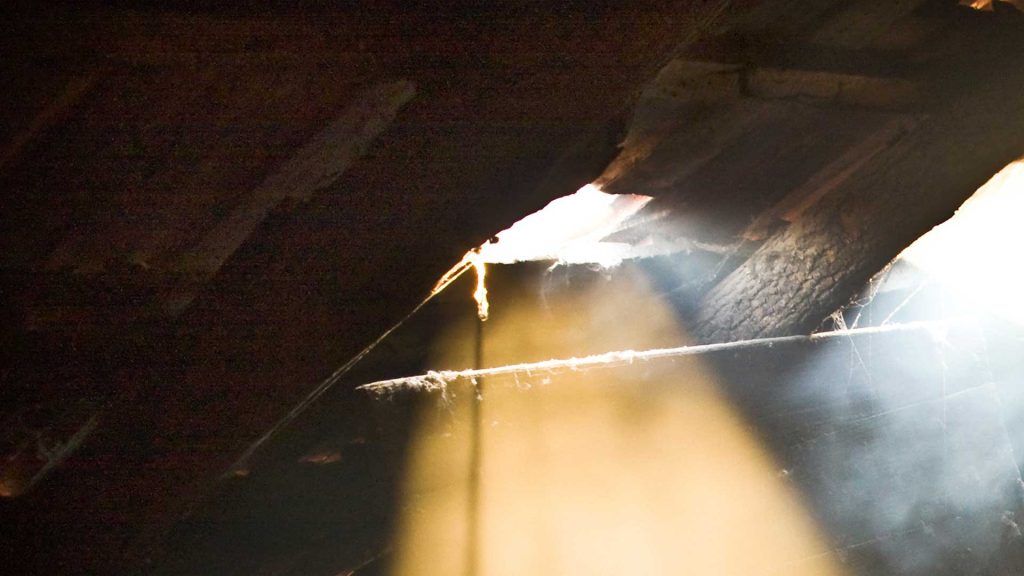
In the PNW, a small hole becomes a big problem fast.- Action: If you see light through the boards or dark “tide marks” on your rafters, you have an active leak. Small leaks can be patched, but if the wood is soft, replacement is imminent.
- Cracked or “Alligatored” Shingles
Fluctuating temperatures cause shingles to expand and contract. Over time, they crack.
- The Verdict: Scattered cracks are repairable. Widespread cracking across the whole slope means the material has reached the end of its life.
- A Sagging Roofline
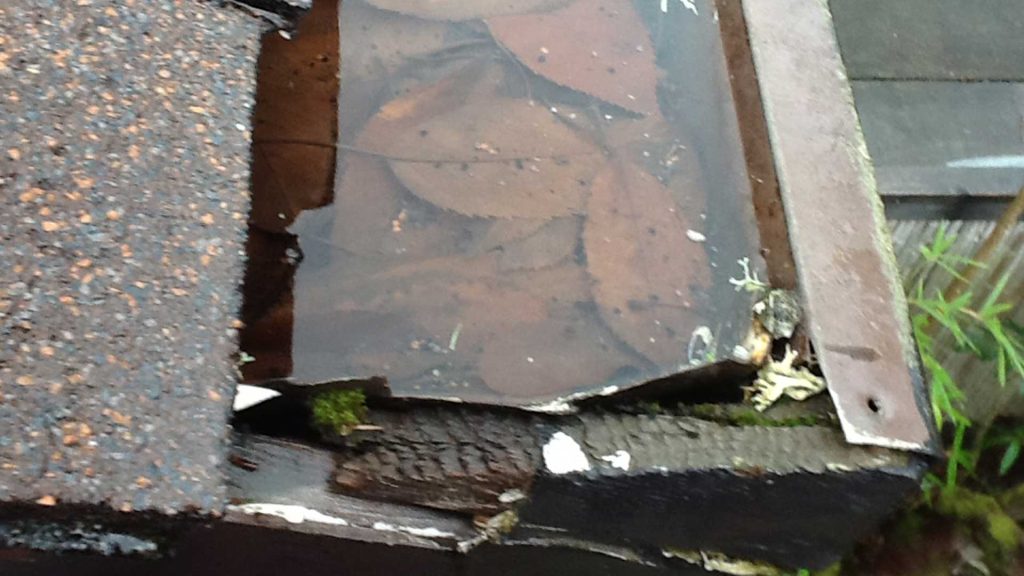
This is an emergency sign. It often indicates that our heavy rains have soaked into the roof decking or supports, causing the wood to rot and give way.
- The Fix: This almost always requires a full tear-off to replace the damaged structural wood.
- Curling or Cupping
In the PNW, curling is often a sign of poor attic ventilation combined with our high humidity.
- The Verdict: Curled shingles are prone to being caught by the wind. If the curling is widespread, the roof is no longer shedding water effectively.
- Spongy or “Bouncy” Feeling
If you feel a “give” when walking on the roof, the plywood decking underneath is likely compromised by moisture.
- Action: Check your attic insulation. If it’s damp or compressed, your roof’s “foundation” is failing.
- Storm or Tree Damage
Large firs and oaks are beautiful, but they take a toll on roofs.
- The Verdict: Impact damage can be deceptive. A professional inspection is required to see if the impact cracked the waterproof underlayment beneath the shingles.
Get a Professional PNW Roof Assessment
Don’t wait for a ceiling puddle to take action. Delaying only makes the problem worse. We know Oregon roofs better than anyone, and we’ll give you an honest, onsite assessment. Give us a call at 503-393-3185 for your free quote today!